
Stop using your home sale proceeds for another house
A few months ago, I had a conversation with a 42-year-old client who almost made his decision.
His parents' house had been sold. ₹1 crore had landed in his account. He had his own home already. The old house was no longer needed.
And his plan, before he spoke to us, was straightforward: reinvest the proceeds into another property, because that's what you do with money from a house. You put it back into another house.
What stopped him was a single moment of hesitation. He wasn't fully sure. So he reached out to Finamily first.
What we did first before touching a single rupee
At Finamily, before we recommend anything, we do two things without exception.
First, a thorough intake process: current investments, income, expenses, existing assets, liabilities, dependents. The full financial picture.
Second, a structured risk profiling exercise - not a questionnaire you fill in five minutes, but a genuine conversation about how you'd feel watching ₹1 crore become ₹75 lakhs on paper, and what you'd do. Would you hold? Would you exit? Would you add more?
What we found out about his situation:
Risk profile: moderate. Meaning: he understood markets go up and down, but he didn't want to watch his principal disappear. He needed the money to work, but gently.
He had never invested in mutual funds. Equity was a foreign language. Debt funds didn't exist in his mental map of investing.
He knew FDs. He knew property. That was it.
Three things shaped everything that followed: the risk profile, the goal timelines, and the valuation context.
The Allocation: Matching each goal to the right product
This is where it gets specific.
He had two kids. Goals spread across three different time horizons:
Goal 1 - First Child's Higher Education (3 Years away)
Three years is too short for equity. Markets can fall 30-40% and not recover within 3 years. A client with moderate risk appetite has no business putting 3-year money in equity.
Recommendation: Ultra short-term debt / liquid fund category.
Principal preservation with modest returns above FD rates. The goal is safety and accessibility and not growth.
Goal 2 - Second Child's Higher Education (7 Years away)
Seven years is where you can begin introducing equity, but carefully. The client isn't comfortable with high volatility, and 7 years, while enough for equity to work, doesn't give you much room if you enter at the wrong time.
Recommendation: Dynamic Asset Allocation Fund (also called Balanced Advantage Fund).
These funds shift between equity and debt based on market valuations, reducing equity when markets are expensive, increasing equity when markets are cheap. Exactly aligned with the VBA Framework philosophy. Lower volatility than pure equity. More growth than pure debt. The right product for a moderate risk investor with a 7-year horizon.
Goal 3 - Retirement (18 Years)
Eighteen years is the kind of horizon where equity does its best work. The compounding math at this distance is powerful. Market corrections become opportunities. Time absorbs volatility.
Here we split across three components:
Component A - Flexi Cap Fund
Core equity exposure across India's best businesses, no market cap restriction.The engine of long-term growth.
Component B - IT / Technology Thematic Fund
A specific VBA Framework call. At the time of investment, IT sector valuations had corrected significantly. The thematic allocation was a deliberate, time-bound bet on mean reversion in a sector with strong structural demand but temporarily depressed prices. This is not a permanent allocation, it's an opportunity allocation.
Component C - Conservative Hybrid Fund (35% equity / 65% debt)
This was a deliberate choice that deserves explanation. Within the long-term equity sleeve, we maintained a conservative hybrid specifically to keep a debt buffer that could be redeployed into equity if markets fell sharply. It slightly reduces average returns in a flat or bull market, but provides optionality in a downturn that a pure equity allocation doesn't.
The Allocation: Matching each goal to the right product
This is where it gets specific.
He had two kids. Goals spread across three different time horizons:
Goal 1 - First Child's Higher Education (3 Years away)
Three years is too short for equity. Markets can fall 30-40% and not recover within 3 years. A client with moderate risk appetite has no business putting 3-year money in equity.
Recommendation: Ultra short-term debt / liquid fund category.
Principal preservation with modest returns above FD rates. The goal is safety and accessibility and not growth.
Goal 2 - Second Child's Higher Education (7 Years away)
Seven years is where you can begin introducing equity, but carefully. The client isn't comfortable with high volatility, and 7 years, while enough for equity to work, doesn't give you much room if you enter at the wrong time.
Recommendation: Dynamic Asset Allocation Fund (also called Balanced Advantage Fund).
These funds shift between equity and debt based on market valuations, reducing equity when markets are expensive, increasing equity when markets are cheap. Exactly aligned with the VBA Framework philosophy. Lower volatility than pure equity. More growth than pure debt. The right product for a moderate risk investor with a 7-year horizon.
Goal 3 - Retirement (18 Years)
Eighteen years is the kind of horizon where equity does its best work. The compounding math at this distance is powerful. Market corrections become opportunities. Time absorbs volatility.
Here we split across three components:
Component A - Flexi Cap Fund
Core equity exposure across India's best businesses, no market cap restriction.The engine of long-term growth.
Component B - IT / Technology Thematic Fund
A specific VBA Framework call. At the time of investment, IT sector valuations had corrected significantly. The thematic allocation was a deliberate, time-bound bet on mean reversion in a sector with strong structural demand but temporarily depressed prices. This is not a permanent allocation, it's an opportunity allocation.
Component C - Conservative Hybrid Fund (35% equity / 65% debt)
This was a deliberate choice that deserves explanation. Within the long-term equity sleeve, we maintained a conservative hybrid specifically to keep a debt buffer that could be redeployed into equity if markets fell sharply. It slightly reduces average returns in a flat or bull market, but provides optionality in a downturn that a pure equity allocation doesn't.
How we deployed it: The SIP Decision
The client had ₹1 crore available as a lump sum.
We did not deploy it all at once.
The VBA Framework at the time showed valuations that were fair but not cheap; no zone was screaming ‘deploy everything now’. The client's moderate risk profile meant he'd feel a market correction more acutely than a seasoned equity investor.
And behavioural research is clear: new equity investors who start with a large lump sum and immediately see 10-15% paper losses are the most likely to exit prematurely, locking in real losses.
Decision: Systematic Transfer Plan (STP), treating the lump sum as a reservoir, deploying systematically into equity funds over months.
The lump sum went into the liquid fund. From there, a fixed amount transfers monthly into the equity and hybrid funds. The client gets rupee-cost averaging. The client gets time to watch the portfolio without the vertigo of a single large entry.
Five to six months into the SIP process, something unexpected happened.
The client started topping up. From his regular income. He had started a voluntary SIP, not because we pushed him, but because he now understood the process well enough to want more exposure to it.
The return on this portfolio will compound over 18 years. We'll measure that later. What we can measure now is the less tangible outcome: a client who came in to buy a house and left understanding a whole new asset class - and confident enough to invest in it from his own salary every month.
"Today, I have clarity for a new asset class that I didn't know about for 20 years, that I was not confident about putting my feet in. Today, I have that clarity to go ahead with it. And that significantly expands the options that I have to invest going forward. I'm very happy and thankful for that."
What this case study shows about Finamily
We didn't just allocate a corpus. We spent three to four conversations mapping goals, explaining asset classes, profiling risk honestly, and building a structure the client could understand and believe in.
The result wasn't just a portfolio. It was a client who now voluntarily invests more, because he understands why.
That's what goal-based financial planning actually looks like.
The framework compares current valuations (P/E ratios) against long-term historical medians to identify where value and margin of safety reside.
VBA STATE OF PLAY - August 2026
Where the Nine Buckets Stand and What You Should Do
| Bucket | Valuation Zone | Current P/E | Historical Median P/E | Strategic Action |
|---|---|---|---|---|
| India Large Cap | Fair | 20.4x | 23.4x | Maintain SIPs, Avoid Lumpsum |
| India SMID | Overvalued | 30.9x | 31.3x | Trim if >15–20% allocation |
| S&P 500 (US Large) | Overvalued | 25x | 20.37x | Hold, Currency Hedge (5–8%) |
| Nasdaq 100 (US Tech) | Overvalued | 29.1x | 27.3x | Hold, Do Not Chase |
| European Equity | Overvalued | 18.9x | 14x | Neutral Posture |
| EM ex-China | Overvalued | 19.05x | 14x | Hold, Do Not Chase |
| China Equity | Undervalued / Cheap | 9.7x | 11.1x | Priority Focus Area |
| Brazil | Overvalued | 10.9x | 9.7x | Satellite Position (5–8%) |
| India Debt | Active Allocation | 6.80% (10Y G-Sec) | N/A | Short to Medium Duration |
Finamily Flow Rule - August 2026
Fresh capital flows in this order:
Deploy Fresh Funds: China (Undervalued/Cheap) → India Large Cap (Fair) → EM ex-China → European Equity (Fair) → Brazil (High Risk Satellite) → India Debt (Active)
Hold / Pause Fresh Capital: S&P 500 & Nasdaq 100 (Overvalued)
Avoid/ Trim Excess: India SMID (Trim if above target limit)
The VBA Framework allocates based on current valuations. It does not predict where markets are going.
Read more about the VBA framework here>
Join my Newsletter
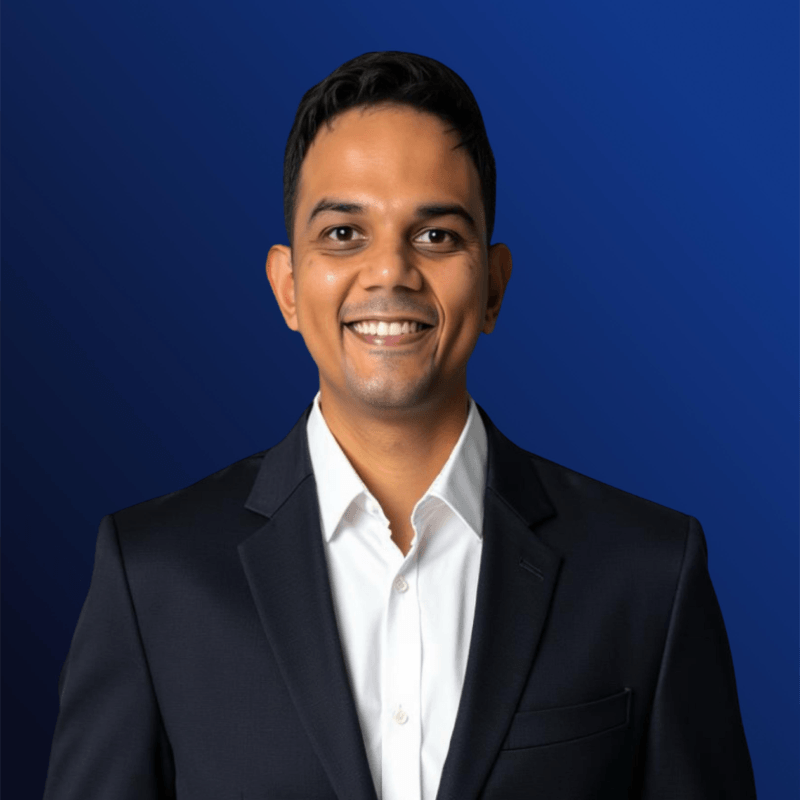
Hey, I'm Avinash
Welcome to my blog! This is a collection of real case studies from my clients that helps you understand how to solve investment problems and approach financial goals.

Created with © Avinash Baskar | AMFI-registered Mutual Fund Distributor ARN-264201